
Listening to Batteries: The Team That Caught Tesla's Attention
Battery manufacturers spend days testing cells before they can be used - a costly bottleneck in an industry under pressure to scale. German deep-tech startup Limatica believes it can reduce that process to just 30 minutes.
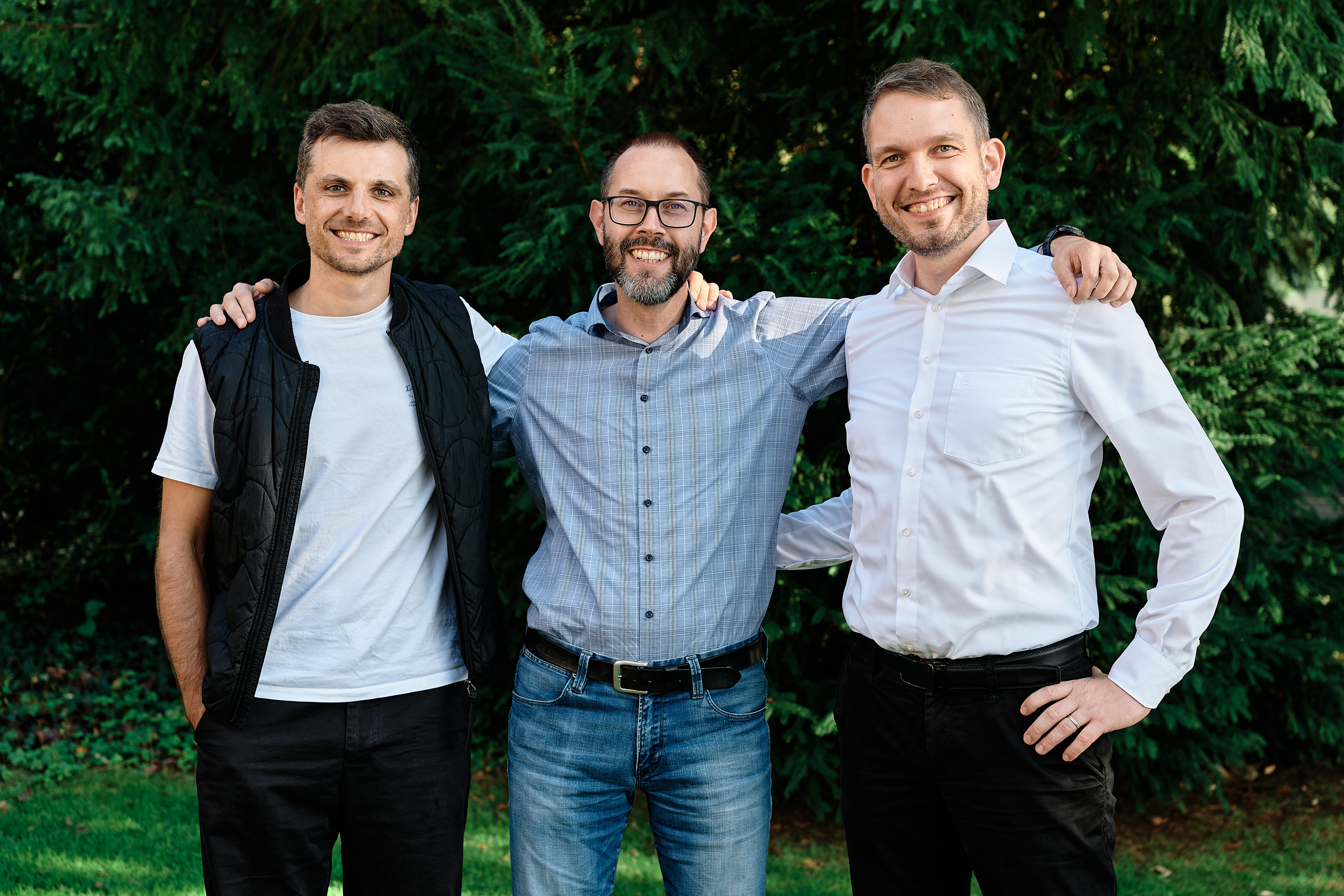
Following its win at the Tesla Cell Giga Challenge and a first test installation at LG Energy Solution in South Korea, we spoke with co-founder Bastian Ruther about the technology behind the breakthrough, the realities of industrial adoption, and why faster testing may be only the beginning.
Bastian, Limatica has just won the Tesla Cell Giga Challenge, competing against 120 startups from 20 nations. What does this recognition mean for you?
It is a tremendous validation that we're working on a problem that really matters to the industry. Tesla is one of the most innovative companies in the sector, with an exceptionally high level of vertical integration. Being selected by its technical experts is a strong endorsement of our technological approach.
We're now discussing possible next steps with Tesla. But regardless of where those discussions lead, the award confirms that we're tackling the right problem at the right time.
Many people probably assume that battery quality testing is already highly automated. Why does it still take days?
Every battery cell must be tested before use. Today, manufacturers typically measure its voltage, wait several days, and measure again to detect self-discharge. Temperature changes and electrochemical processes can distort the results, making faster testing difficult.
Imagine discovering only few days into production that something needs adjusting. By then, thousands of potentially defective cells may already have been produced - at considerable cost as well as environmental impact caused by scrap.
“Today, manufacturers wait days to find out whether a battery cell is defective. We can get that answer in just 30 minutes.”
You say your technology can reduce testing to around 30 minutes. How does it work?
We take a fundamentally different approach. Instead of waiting for the voltage to drop, we analyze tiny fluctuations in the voltage itself - what we call voltage noise - and predict the self-discharge outcome.
Think of it like a stethoscope. We simply listen to what's happening inside the cell.
These microscopic fluctuations reveal information about the cell's internal condition. By analyzing the patterns, we can distinguish between healthy cells and those showing signs of defects.
And here's what makes it particularly interesting: conventional testing provides only a handful of data points. We generate around five million data points in just 30 minutes. That opens up entirely new possibilities beyond a simple good-or-bad decision. And we see this already within our projects.
“Traditional testing gives you 3 data points. We generate 5 million. Imagine what manufacturers could learn about their production processes.”
You've already installed a test station at LG Energy Solution in South Korea and worked with several other manufacturers. What has surprised you most about what customers actually want?
We initially thought speed would be the biggest selling point. But different manufacturers have very different priorities.
For large-scale producers under intense cost pressure, every minute counts. Even 30 minutes may not be fast enough - they want us to go faster.
Specialty battery manufacturers, for example in aerospace or defense, look at it differently. Their priority is making sure defective cells don't leave the factory. They're particularly interested in the additional quality information our technology provides.
That's been a fascinating learning: we're not just developing a faster test. We're opening up an entirely new level of quality intelligence.
Introducing a new technology into an operating battery factory isn't easy. How close are you to turning successful pilots into longer-term customer relationships?
One of our biggest early challenges was simply getting access to freshly manufactured battery cells. You cannot fully validate this technology in a laboratory.
Every production environment is different, and we need to understand how those conditions influence our measurements. We've now tested more than 10.000 freshly produced cells in industrial environments, learning from each deployment. Therefore, TTC (total tested cells) is one of our key KPIs.
Our validation projects are already paid, and we're discussing agreements beyond the pilot stage with two partners - earlier than we initially expected.
The next major step is making our technology automated enough to integrate directly into production lines. That's what will turn successful validation into scalable commercial deployment.
“Our ambition isn't just to tell manufacturers which battery cells are defective. We want to help them understand why they became defective in the first place.”
Today, you can identify defective cells in 30 minutes. What's the next breakthrough you're working toward?
Today, manufacturers largely ask whether a cell is good or bad. The big vision we are chasing is to help them understand why it became defective in the first place.
With millions of data points per cell, we see the potential to identify production problems earlier, understand differences between manufacturing processes and machines, and ultimately reduce waste. We are already working on different “root-cause”- cases with manufacturers and research partners. For example, we are collaboration i.a. with Dürr & Fraunhofer FFB to understand better how voltage noise can be used for wetting progress after electrolyte filling. This is a topic, many manufacturers asked for (funded by the Bundesministerium für Forschung, Technologie und Raumfahrt).
That's where we see the biggest long-term opportunity: not just making quality testing faster, but helping manufacturers continuously improve the quality of what they produce and how they produce.
Thanks for these interesting insights, Bastian, and all the best to you!